Why Online Productivity Tools Are Replacing Traditional Software
In the last decade, the way we work has changed dramatically. Offices are no longer limited to physical locations, teams collaborate across continents, and work happens on laptops, tablets, and even smartphones. In this fast-evolving digital environment, online productivity tools are rapidly replacing traditional software, and for good reason.
From cloud-based document editors to online project management platforms, web tools are becoming the backbone of modern productivity. Professionals, students, freelancers, and businesses are increasingly choosing online solutions over bulky, expensive, and outdated offline software.
In this blog, we’ll explore why online productivity tools are replacing traditional software, how this shift benefits users, and what it means for the future of work.
What Are Online Productivity Tools?
Online productivity tools are web-based applications that help users perform tasks such as writing, designing, calculating, collaborating, managing projects, and organizing data—without installing heavy software on their devices.
These tools usually run directly in a web browser and store data securely in the cloud. Examples include online document editors, time trackers, file converters, SEO tools, calculators, planners, and collaboration platforms.
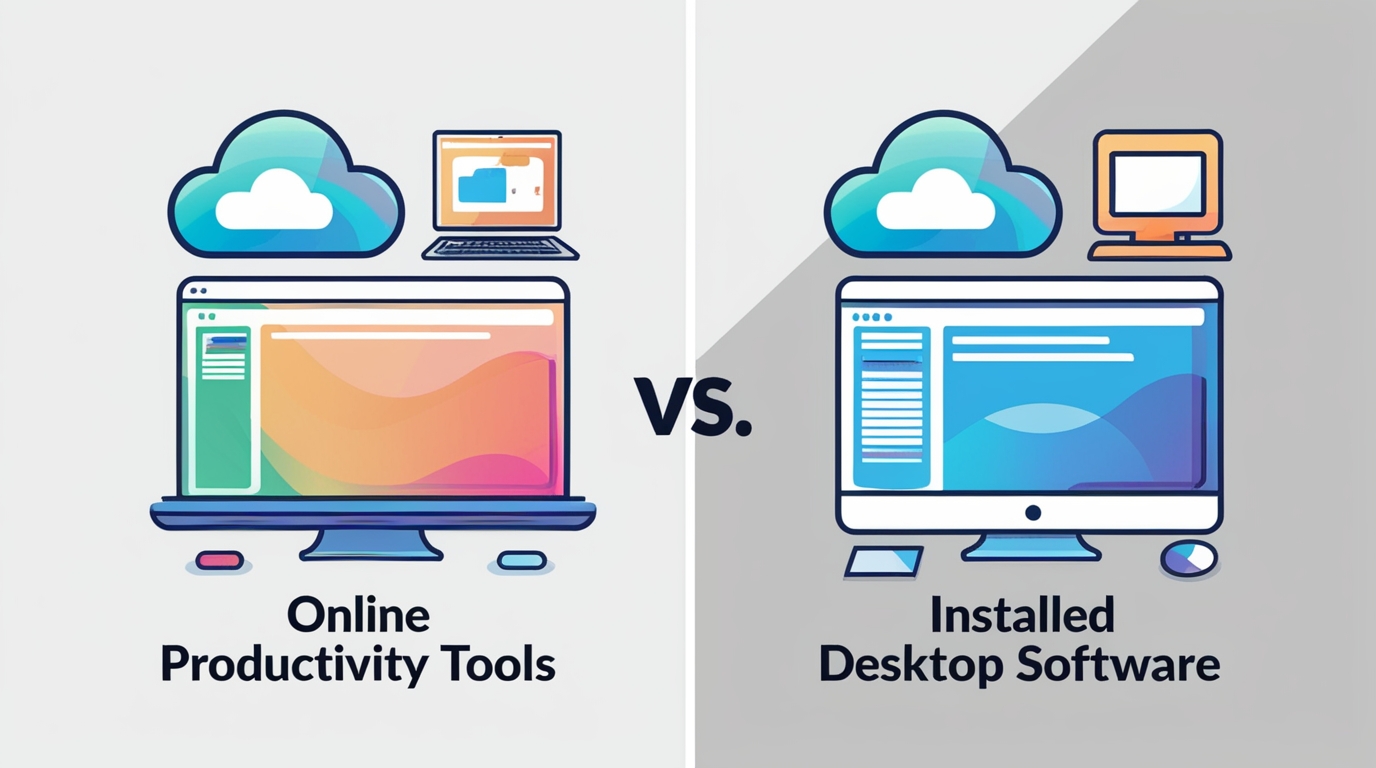
Traditional software, on the other hand, typically requires:
Installation on a specific device
Manual updates
High system requirements
One-time or recurring license fees
The difference between these two approaches is at the core of why users are shifting toward online solutions.
1. Easy Access From Anywhere, Anytime
One of the biggest reasons online productivity tools are replacing traditional software is accessibility.
With traditional software:
You’re tied to a specific device
Files are stored locally
Working remotely can be difficult
With online tools:
You can log in from any device
Work from home, office, or while traveling
Access files instantly with an internet connection
This flexibility is especially valuable in today’s remote and hybrid work culture. Teams no longer need to be in the same place—or even the same country—to work efficiently.

2. No Installation, No Maintenance Hassles
Installing traditional software often comes with problems:
Compatibility issues
Large file sizes
Slow installations
Frequent crashes
Online productivity tools eliminate all of this.
You simply open a browser, visit the tool, and start working. There’s no need for downloads, system configuration, or manual updates. Everything runs on the provider’s servers, saving users time and frustration.
For non-technical users, this simplicity is a major advantage.
3. Automatic Updates and Latest Features
Traditional software often requires users to:
Download updates manually
Purchase newer versions
Deal with outdated features
Online tools update automatically in the background. This means:
You always use the latest version
New features appear without extra cost
Security patches are applied instantly
This ensures better performance, improved security, and access to modern features without extra effort.
4. Cost-Effective and Budget Friendly
Cost is another major factor driving the shift.
Traditional software often involves:
High upfront costs
Paid upgrades
Separate licenses for multiple devices
Online productivity tools usually follow:
Free or freemium models
Affordable monthly plans
No extra charges for updates
Many online tools—especially those offered by platforms like Tulsi Digital Hub—provide powerful features completely free, making them accessible to students, startups, and small businesses.
5. Better Collaboration and Teamwork
Collaboration is where online tools truly shine.
Traditional software struggles with:
File version conflicts
Emailing attachments
Manual syncing
Online productivity tools allow:
Real-time collaboration
Multiple users editing simultaneously
Instant sharing with links
Live comments and suggestions
This is why online tools are essential for modern teams working remotely or across departments.

6. Cloud Storage and Data Security
Online tools store data in the cloud, which provides:
Automatic backups
Protection from device failure
Easy recovery of files
While some users worry about cloud security, reputable platforms use advanced encryption, secure servers, and access controls that are often safer than local storage.
Compared to losing data due to a crashed hard drive, cloud-based tools offer greater peace of mind.

7. Cross-Platform Compatibility
Traditional software often works on:
Only Windows or macOS
Specific hardware configurations
Online productivity tools are:
Platform-independent
Compatible with Windows, macOS, Linux, Android, and iOS
Accessible via any modern browser
This makes them ideal for users with multiple devices or mixed operating systems.
8. Faster Workflow and Higher Productivity
Online tools are designed with speed and efficiency in mind.
Features like:
Instant processing
One-click actions
Clean and simple interfaces
help users complete tasks faster compared to traditional software that may feel cluttered or slow.
This efficiency is why professionals increasingly rely on online tools for daily tasks such as:
File conversion
Text formatting
Calculations
SEO analysis
9. Scalability for Growing Businesses
As businesses grow, their software needs change.
Traditional software often requires:
New licenses
System upgrades
IT support
Online productivity tools scale easily:
Upgrade plans when needed
Add more users instantly
No infrastructure changes
This flexibility makes them perfect for startups and fast-growing teams.
10. The Future Is Clearly Online

The shift from traditional software to online productivity tools is not a trend—it’s a transformation.
With advancements in:
Cloud computing
AI-powered tools
Faster internet connectivity
online tools will continue to evolve and replace outdated offline systems.
Platforms like Tulsi Digital Hub are part of this future, offering fast, free, and easy-to-use online tools designed for modern users.
Final Thoughts
Online productivity tools are replacing traditional software because they are:
More accessible
Cost-effective
Easier to use
Better for collaboration
Designed for modern workflows
Whether you’re a student, professional, freelancer, or business owner, switching to online productivity tools can save time, reduce costs, and improve efficiency.
The future of productivity is online—and it’s already here.